
Building Vocabulary Through Play
Why Word Games Like Word Noodles Belong in Every Classroom
We all know that vocabulary is a cornerstone of strong reading skills. The larger a student’s vocabulary, the better they’re able to comprehend what they read, express themselves clearly, and engage deeply with the world around them. Vocabulary growth doesn’t have to rely solely on memorization or rote exercises (which can become so boring for you and your students). Vocabulary can be built through play!
The Power of Word Play
Word games have long been recognized as a powerful tool for building language skills in a way that feels fun and low-pressure for students. They encourage deep thinking, require careful attention to word meaning and context, and challenge students to make connections across words, concepts, and categories.
Games like Word Noodles do more than just entertain—they offer an engaging, brain-boosting way to build vocabulary, reinforce spelling, and promote critical thinking. When students are actively working with words, their language skills grow naturally, almost effortlessly. The confidence that comes with language skills can also lead to confidence in reading!
Introducing Word Noodles: Vocabulary + Strategy = Classroom Gold
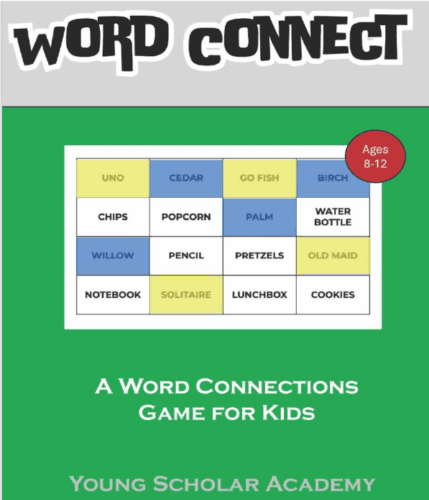
Inspired by the popularity of the New York Times Connections game, Word Noodles offers a student-friendly twist that keeps the strategy and brain power—but dials up the classroom relevance (and fun!).
Each Word Noodle puzzle presents students with a grid of words that must be sorted into groups based on meaningful connections. As they work to identify word relationships and patterns, students are building essential reading and language skills in a way that feels like play.
What makes Word Noodles a standout vocabulary tool?
- It grows with your learners: With 50 puzzles that increase in difficulty, Word Noodles is perfect for students across a range of skill levels.
- It promotes flexible thinking: There’s often more than one “right” way to group words, encouraging students to justify their thinking and explore multiple perspectives.
It builds confidence: Word puzzles help normalize productive struggle—teaching students that it’s okay to wrestle with words and work through uncertainty.
The Benefits of Using Word Games in the Classroom
Whether it’s part of your literacy block, a morning work routine, or an enrichment activity, using word games like Word Noodles offers benefits that extend beyond vocabulary:
-Strengthens memory and concentration
-Enhances problem-solving and analytical thinking
-Reinforces spelling and sight word recognition
-Encourages creativity and collaboration
-Builds a habit of play-based learning that lasts a lifetime
In fact, research supports what teachers already know from experience: playful learning promotes emotional well-being, deeper engagement, and long-term retention. Vocabulary instruction doesn’t have to be a worksheet—it can be a joyful part of your classroom culture.
Easy Ways to Incorporate Word Noodles into Your Week
Here are just a few classroom-friendly ways to bring Word Noodles into your routine:
- Word Noodle Wednesdays – Add a puzzle to your midweek routine as a warm-up or literacy center.
- Morning Work – A quiet and purposeful start to the day.
- Small Group Enrichment – Great for early finishers or students who need vocabulary support.
- Whole-Class Collaboration – Project a puzzle and solve it together as a class discussion.
- Independent Challenge Work – Perfect for advanced learners needing an extra push.
You can even differentiate by scaffolding puzzles—providing categories or hint words for younger learners while encouraging open-ended exploration for older students.
Vocabulary growth is too important to leave to chance—and it doesn’t have to be boring. When we introduce word games like Word Noodles into our classrooms, we give students the gift of language through curiosity, connection, and play.Looking for a no-prep way to boost vocabulary and engagement? Try Word Noodles and watch your students light up with excitement—and growth.