
The Power of Root Words

Boosting Vocabulary the Smart Way
While summer break is still in full swing–filled with sunshine, popsicles, and maybe a few extra hours of sleep–many educators and parents are already thinking about the upcoming school year. Whether you’re preparing lesson plans, exploring supplemental tutoring materials, or planning your homeschool curriculum, now is the perfect time to consider how to intentionally build vocabulary into your instruction. One of the most effective ways to do this? Teaching Greek and Latin roots.
Why Greek and Latin Roots Matter
Over 60% of the English language has roots in Greek or Latin, and that percentage jumps even higher in academic vocabulary. When students understand root words, prefixes, and suffixes, they’re better equipped to decode unfamiliar words, make educated guesses about meanings, and build a stronger command of language across subjects.
Teaching Greek and Latin roots is more than just a vocabulary boost—it fosters critical thinking, improves reading comprehension, and helps students develop strategies they’ll use for years to come, especially as content becomes more rigorous.
The Importance of Intentional Vocabulary Instruction
Students encounter new words daily, but not all exposure is equal. Direct instruction of root words provides structured practice in word analysis and helps build foundational language skills. When students learn to dissect words—breaking them into meaningful parts—they not only remember them more effectively, but also transfer this knowledge to reading, writing, and test-taking. This kind of vocabulary instruction can benefit all learners, from classroom students to homeschoolers to those working with tutors or interventionists.
A Ready-to-Go Solution for Root Word Instruction
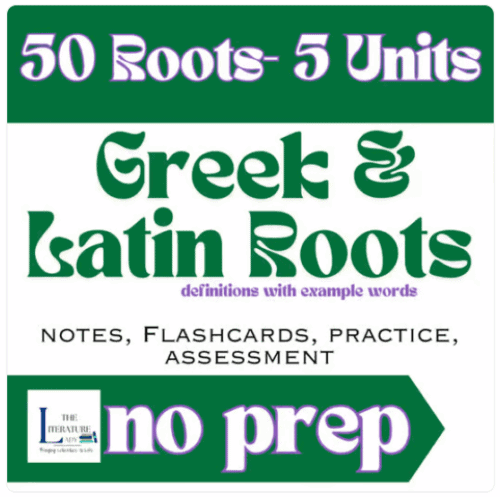
If you’re looking for a no-prep, structured way to bring root word instruction into your learning space, this 12-Week Latin and Greek Roots Unit offers everything you need. Designed with flexibility in mind, it fits seamlessly into classrooms, tutoring sessions, homeschool routines, and intervention groups.
Each two-week unit focuses on 10 carefully selected Greek and Latin roots and includes:
- A notes page for introducing new roots
- Flash cards and a memory game for repetition and practice
- A Latin Root booklet for reference and reinforcement
- A “Dissect the Word” worksheet to apply knowledge
- A matching review activity for engagement
- A built-in assessment to monitor progress
Pacing is flexible—use it as a weekly root word study, supplement your ELA block, or build it into your daily warm-up routine.
Whether you’re planning whole-class instruction or one-on-one learning, this unit gives you a ready-made foundation for building a deeper understanding of language. With repeated exposure, varied practice, and built-in assessments, it helps students move from memorization to mastery.
Best of all? You can use it year after year.
Final Thoughts Before I Get Back to the Summer Sunshine
Summertime may be for relaxing (I hope you’ve found some time to relax and unwind!), but a little strategic planning now can lead to a smoother, more successful school year ahead. Investing in high-impact vocabulary instruction—like Greek and Latin roots—can transform the way students approach language, reading, and learning as a whole.
Explore the full product on Teachers Pay Teachers and get ready to start the year with meaningful, effective vocabulary instruction right from day one.