You Don’t Need More Test Prep

Surviving Test Taking Season
Low-Prep Reading Activities
Let’s have an honest conversation about state testing season. Right now, your students are exhausted. You are exhausted. The pressure is intense, the schedule is disrupted, and everyone is running on fumes.
And you know what your students need right now? Not more test prep.
They need to recharge. They need to be reminded that learning is actually supposed to be enjoyable, not just stressful. They need to remember why they fell in love with reading in the first place, before it became something to be measured and assessed. And honestly? You need a break too.
Here is the good news: You can still teach reading during testing season. Real, meaningful reading. You can keep literacy skills sharp without burning out or boring everyone to tears. The key is choosing activities that build skills while also giving kids (and you) the mental space you all desperately need.
The Case Against More Test Prep
Before we dive into specific activities, let me say this clearly: piling on additional test prep during testing season is counterproductive.
Your students have been preparing all year. They have practiced reading comprehension strategies, answered multiple choice questions, and written constructed responses until their hands cramped. At this point, one more practice test is not going to make the difference. What will make a difference is showing up to the test rested, confident, and still believing that reading is something they can do.
Overloading students with test prep in the days leading up to or immediately following standardized testing creates anxiety, not readiness. It reinforces the idea that reading is something to survive rather than enjoy. And it drains whatever energy reserves students have left.
So instead of drilling, let’s focus on activities that keep literacy alive while also protecting the emotional and mental well-being of your class.
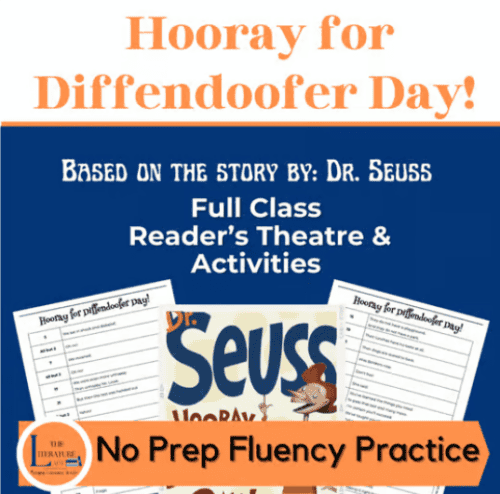
1. Hooray for Diffendoofer Day! Reader’s Theatre
Talk about perfect timing. Dr. Seuss’s Hooray for Diffendoofer Day is literally about a school taking a test. The story celebrates creativity, individuality, and the idea that real learning cannot be fully captured by a standardized assessment. It is exactly the message students need to hear during testing season.
Reader’s theatre transforms this story into an engaging, skill-building activity that feels nothing like work.
Why Reader’s Theatre Works During Testing Season
It is low-prep. The scripts are ready to go. You do not need to create materials, plan elaborate lessons, or spend your evening cutting and laminating. Print, distribute, assign roles, and you are done.
Students love it. There is something about performing that energizes even the most reluctant participants. Students get to embody characters, use expressive voices, and collaborate with peers. It is social, it is active, and it feels like a break from the routine.
It builds real literacy skills. Reader’s theatre is not just fun and games. It develops fluency, prosody, expression, and comprehension. When students practice their lines, they are rereading text multiple times, which is one of the most effective ways to build automaticity. When they perform, they are interpreting meaning and communicating it through tone and pacing.
It is a mental break disguised as learning. Students think they are just having fun. You know they are practicing critical reading skills. Everyone wins.
(Follow my TPT store for 10% off at checkout!)
2. Word Noodles & Connections: Vocabulary with a Side of Fun
Vocabulary instruction does not have to stop during testing season, but it does need to look different. This is not the time for high-pressure memorization or flashcard drills. This is the time for collaborative, game-based learning that keeps brains engaged without adding stress.
Word Noodles and Connections are perfect for this moment. Students work in small groups to make connections between words, find patterns, and solve puzzles together. It feels like play, but it is building vocabulary knowledge, critical thinking, and collaboration skills.
Why This Works
It is social. After days of silent testing, students need to talk, laugh, and work together. Collaborative vocabulary activities provide a healthy outlet for that social energy.
It is not overwhelming. The format is approachable. There are no high-stakes consequences. Students can think, try, revise, and problem-solve without fear of failure.
It keeps vocabulary front and center. Just because testing season is chaotic does not mean we abandon vocabulary development. These activities keep students thinking about words, meanings, and relationships in a way that feels manageable.
It works for mixed-ability groups. Students at different skill levels can contribute meaningfully. Some might identify obvious connections while others notice more nuanced patterns. Everyone has something to offer.
(Follow my TPT store for 10% off at checkout!)
3. Just Read Aloud (Or Put on an Audiobook)
Sometimes the best thing you can do during testing season is simply read to your students. No analysis, comprehension questions, or exit tickets. Just stories.
Pull out a favorite chapter book and read a chapter aloud. Or put on an audiobook, dim the lights, and let students doodle, color, or just close their eyes and listen.
Why This Matters More Than You Think
Reading aloud is not filler and it is not wasted time. It is one of the most powerful literacy practices we have, and during testing season, it serves a dual purpose.
It reminds students why reading matters. When we strip away the assessments and the pressure, reading is about connection, imagination, and emotion. Read-alouds bring that back into focus.
It models fluent reading. Students hear what good reading sounds like: appropriate pacing, expressive intonation, strategic pausing. This is especially valuable for struggling readers who need consistent modeling.
It creates calm. Testing season is loud and chaotic. Dimming the lights and reading aloud creates a moment of stillness. Students can breathe. They can rest. They can just be.
It builds community. When everyone hears the same story, you create shared references and inside jokes. You remind students that they are part of a classroom community, not just test-takers sitting in isolated rows.
Need audiobook ideas? Check out read-aloud options on my YouTube channel for some great suggestions!
4. “Would You Rather… Read Edition”
This activity requires zero prep and delivers maximum engagement. It is perfect for those days when you need something quick to fill five minutes or anchor an entire discussion.
Pose a book-related “Would You Rather” question to the class:
- Would you rather live in Narnia or Hogwarts?
- Would you rather only read series books or standalones forever?
- Would you rather have unlimited books but no time to read, or unlimited time but only one book?
- Would you rather meet your favorite author or your favorite fictional character?
Students choose a side, then discuss, debate, and defend their answers.
Why This Works
It builds reading identity. When students articulate their preferences and defend their choices, they are thinking critically about what they value in books. This kind of metacognitive work strengthens their relationship with reading.
It develops oral language skills. Students practice making claims, supporting arguments, and responding to peers. These are the same skills tested in writing and reading assessments, but in this context, they feel natural and fun.
It gets students talking about books. The goal is not just to answer the question. The goal is to spark conversation about stories, characters, settings, and themes. When students talk about books with enthusiasm, they influence each other. One student’s passionate defense of fantasy novels might inspire another student to try the genre.
It is flexible. You can use this as a morning warm-up, a transition activity, or a full discussion. Adjust the depth based on your available time and energy.
5. Book Commercials
Here is an activity that is completely student-led, requires no materials, and consistently produces genuine excitement about books: Book Commercials.
Give a student 60 seconds to “sell” their current book to the class. No script. No notes. Just pure enthusiasm.
Why Book Commercials Are Magic
They build summarizing skills. To pitch a book in 60 seconds, students have to distill the plot, identify what makes it compelling, and communicate that clearly. This is high-level comprehension work disguised as performance.
They practice oral language. Public speaking is a skill that requires practice. Book commercials provide low-stakes opportunities for students to stand in front of peers and communicate ideas.
They create demand for books. When a peer passionately recommends a book, other students listen. Suddenly, that book sitting untouched on your shelf has a waitlist. Peer recommendations are more powerful than any teacher book talk.
They are completely student-led. You do not have to plan, present, or perform. You just sit back, listen, and enjoy watching students share their love of reading.
Pro Tip: Track the Recommendations
Keep a running list of “advertised” books on a bulletin board or whiteboard. Students can see which titles have been recommended, and you can track which books are generating buzz. This also helps when students ask for recommendations. You can point them toward books their peers have vouched for.
6. “Two Truths and a Lie” Book Edition
This classic game gets a literacy twist. Students come up with two true facts and one lie about a book they have read. Classmates listen carefully, then guess which statement is the lie.
Examples:
- “In this book, the main character has a pet dragon, the story takes place in the future, and the character’s best friend betrays them.”
- “This book is set in New York City, the main character is afraid of dogs, and there is a mystery involving a missing necklace.”
Why This Game Works
It works for any book at any level. Picture books, chapter books, graphic novels, nonfiction—everything is fair game. You do not need to prep different versions for different readers.
It requires zero materials. No handouts. No technology. Just students and their knowledge of books.
It is sneaky comprehension practice. To create believable statements, students have to recall plot details, character traits, and settings accurately. To guess correctly, classmates have to listen carefully and think critically about what makes sense within the story.
It is fast-paced and engaging. Students love the challenge of stumping their classmates. There is an element of friendly competition that keeps energy high.
A Final Word: You Are Doing Enough
State testing season is hard. The pressure is relentless, and there are days when just showing up feels like an accomplishment.
But here is what I want you to know: You are doing enough and you are more than enough.
The fact that you are reading this post, looking for ways to keep learning meaningful and joyful during one of the hardest stretches of the school year, tells me everything I need to know about the kind of teacher you are. You are not just surviving. You are still finding ways to make learning engaging, to protect your students’ well-being, and to choose joy even when it would be easier to coast through on autopilot.
That is not nothing. That is everything.
Testing season will end. The scores will come back, the data will be analyzed, and life will move forward. But what your students will remember is not the bubbles they filled in or the passages they read under timed conditions. They will remember the teacher who read to them when they were stressed. Laughing during “Would You Rather” debates. Feeling seen, supported, and valued even during the hardest weeks of the school year.
Hang in there, friend. We are almost through.